If Sea World’s breeding program continues, a polar bear cub born today could still be on display in 2050. A dolphin calf born today could still be performing in 2070.
Impact for polar bears
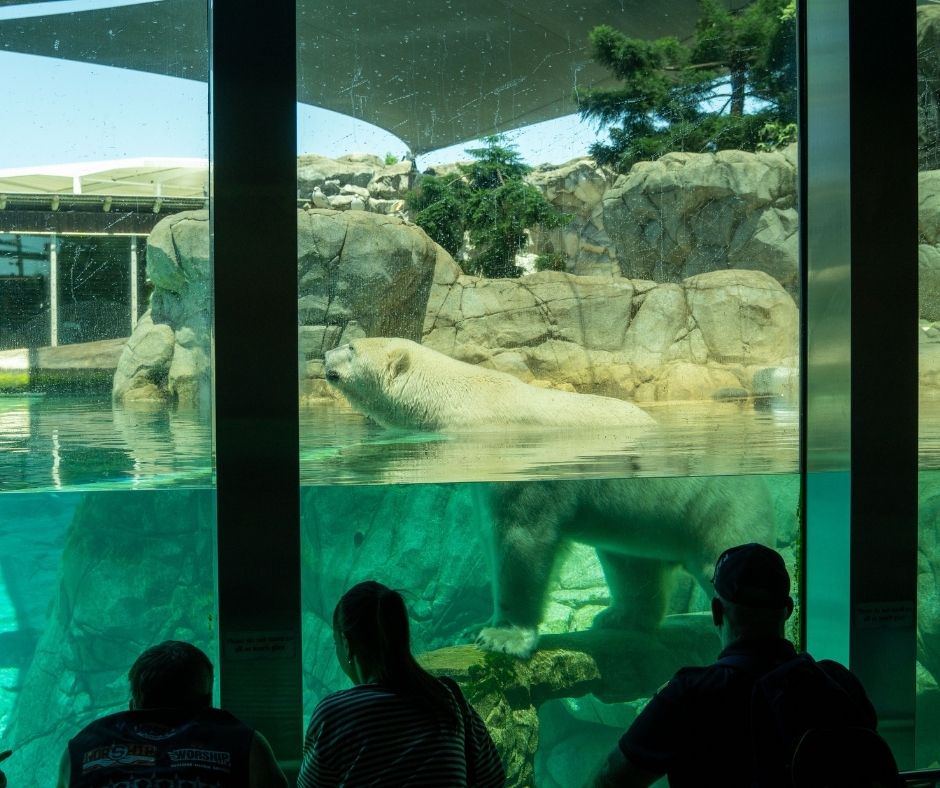
Size
Sea World’s enclosure is 0.001658km², which is thousands of times smaller than the space polar bears use in the wild. Research shows that wide-ranging species like polar bears can experience poorer welfare when confined to restricted, simplified spaces.
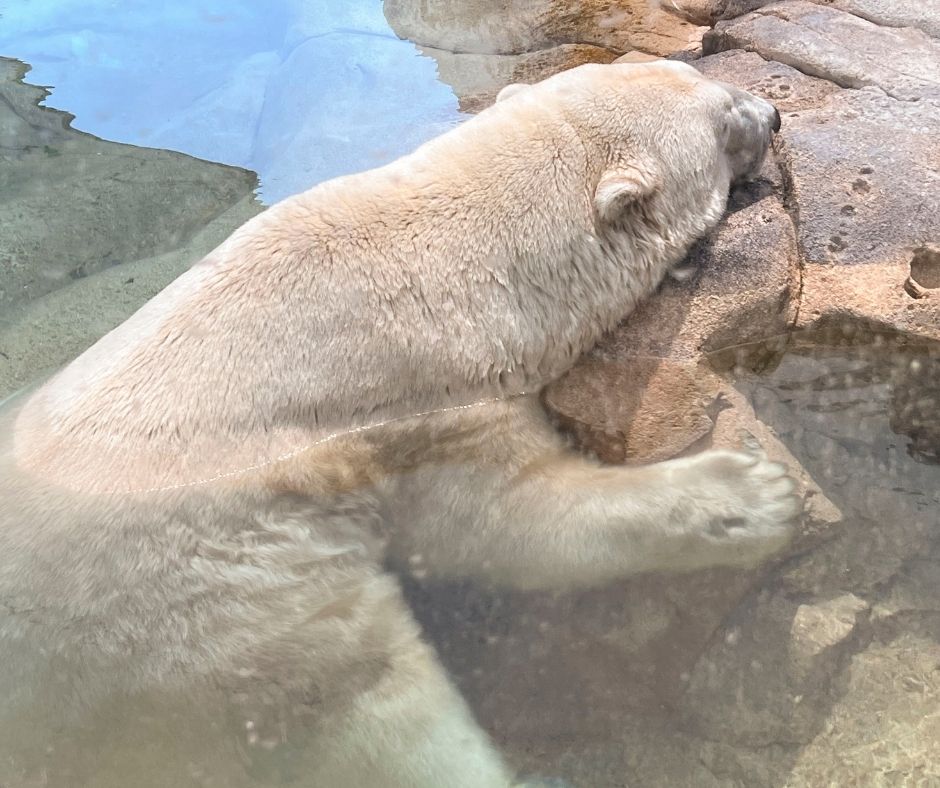
Temperature
Polar bears are built for the Arctic and research shows warmer temperatures put extra strain on their bodies, yet the Gold Coast is consistently warmer than the region Sea World says the polar bear enclosure replicates.
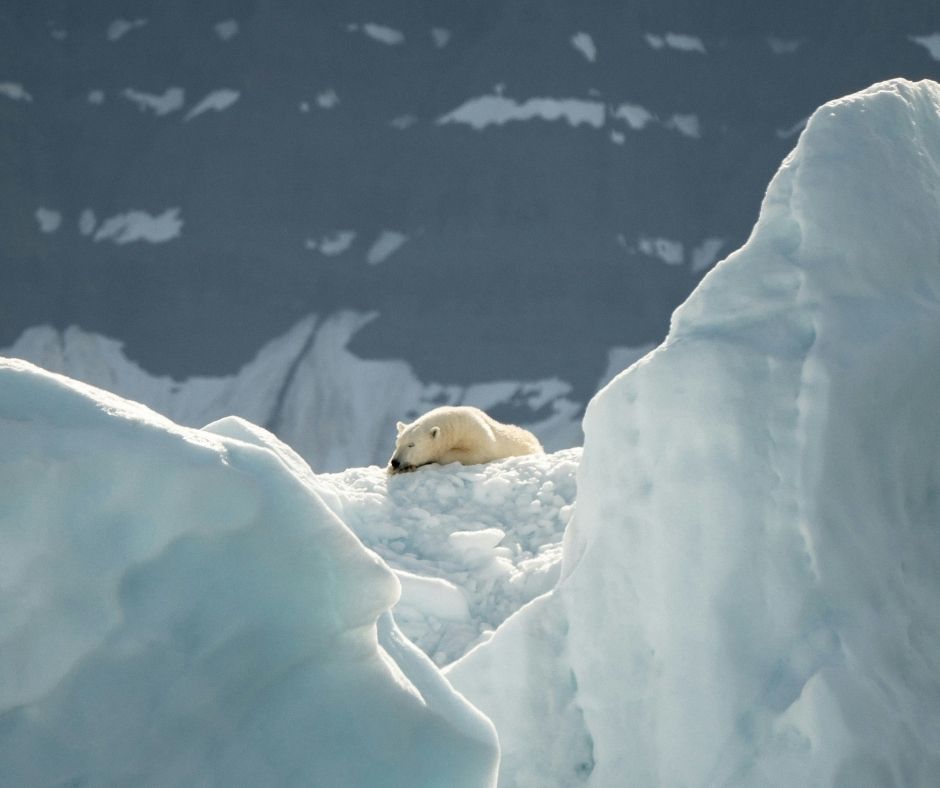
Environmental complexity
Research shows polar bears evolved for cold, highly variable Arctic environments shaped by snow, sea ice, and open water, conditions not easily replicated in a subtropical theme park.
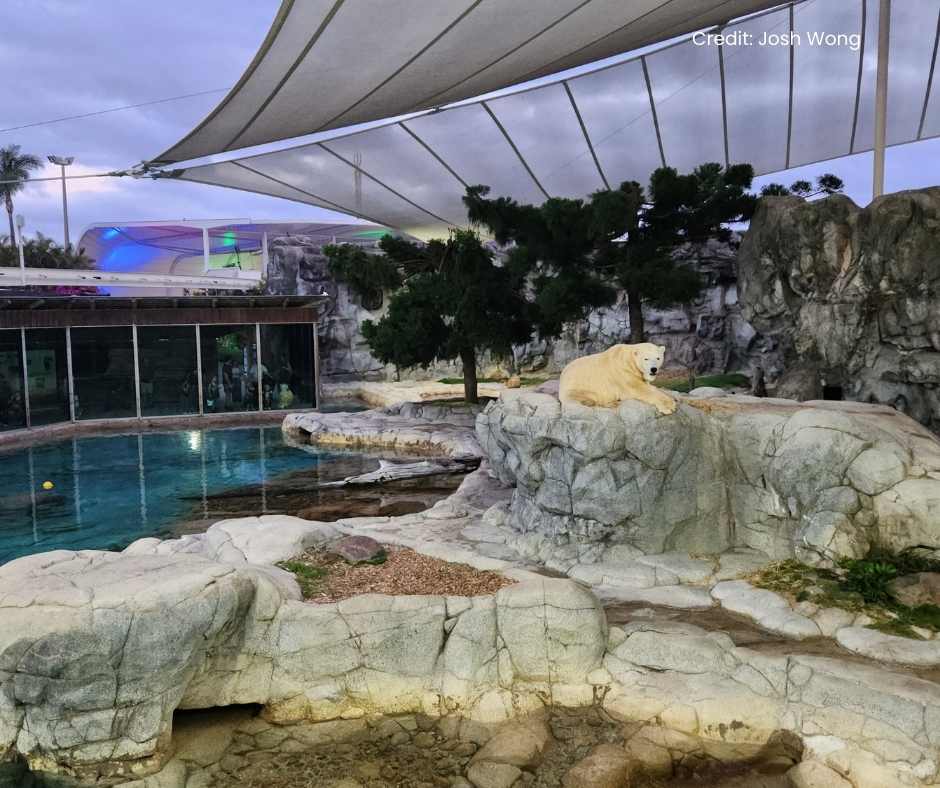
Noise
Polar bears have acute hearing and are sensitive to disturbance. At Sea World they are exposed to repeated noise from rollercoasters, helicopter flights, loudspeakers and night-time events, with limited ability to move away from these.
Impact for dolphins
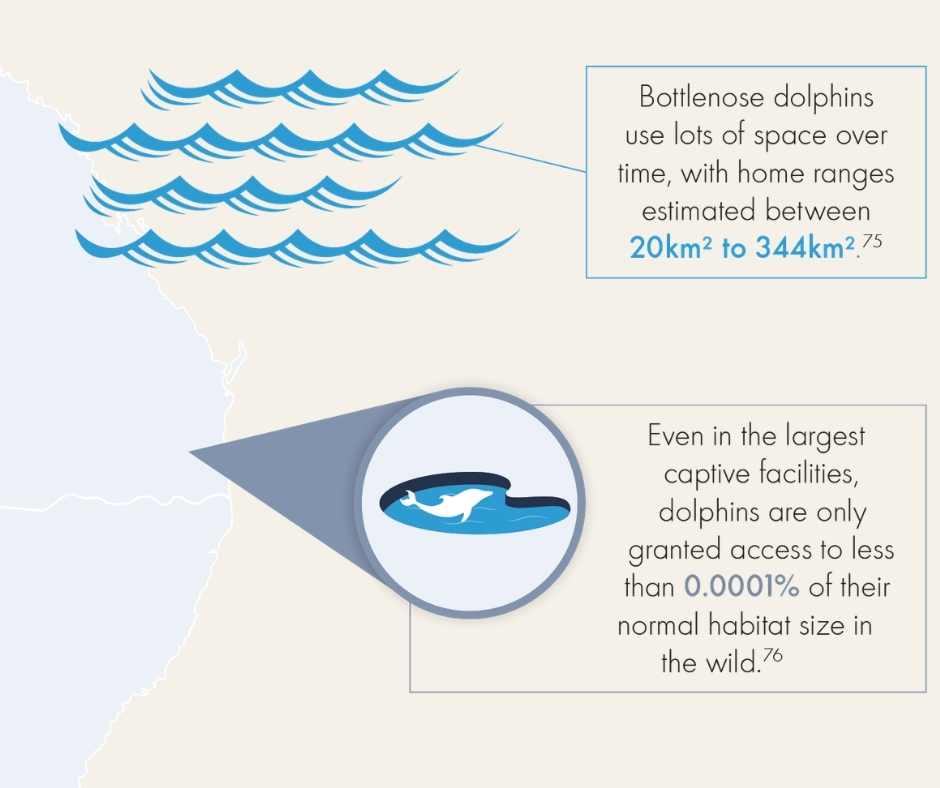
Size
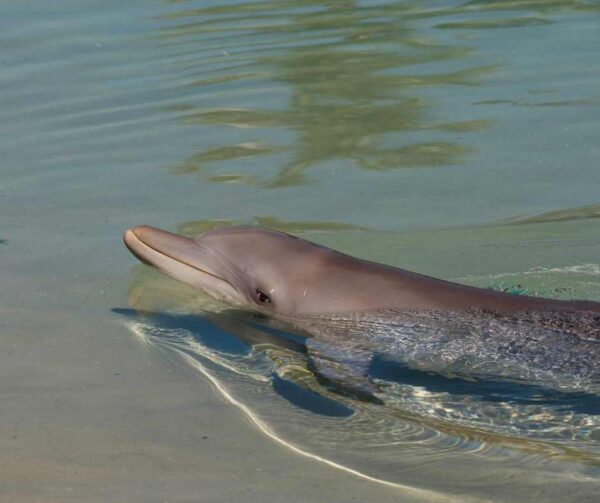
In the wild bottlenose dolphins travel long distances, covering up to 89km a day. At Sea World, dolphins live in lagoons which limit their movement.
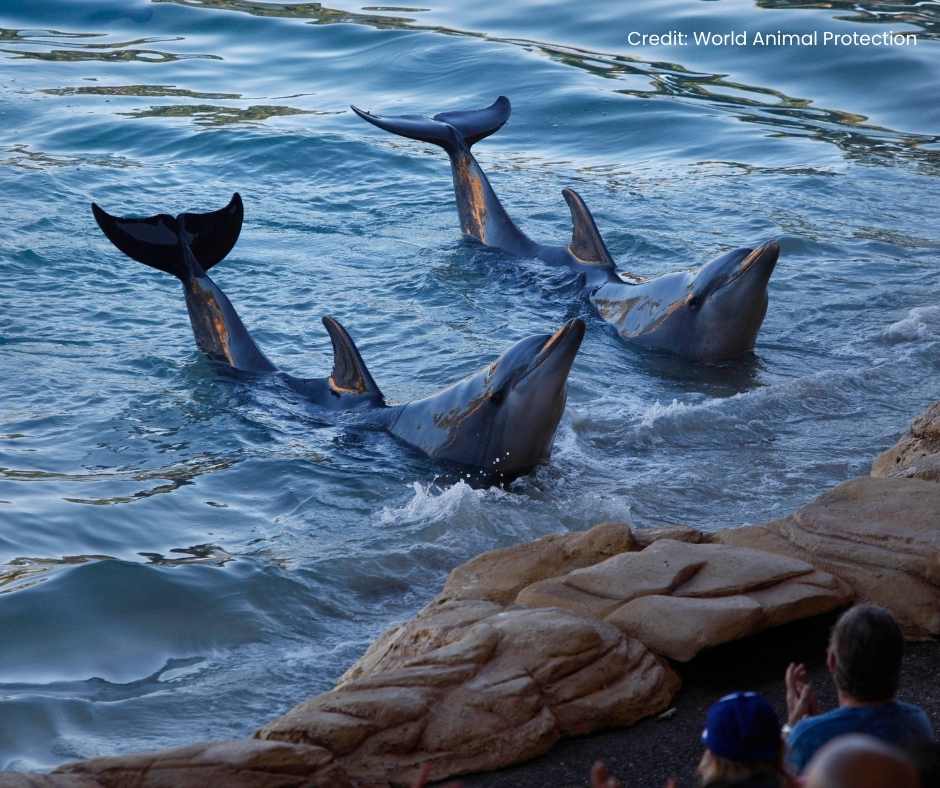
Limitations with social choice
Captivity removes dolphins’ ability to choose who they socialise with. Researchers describe this loss of social control as a key welfare risk for dolphins held under human care.
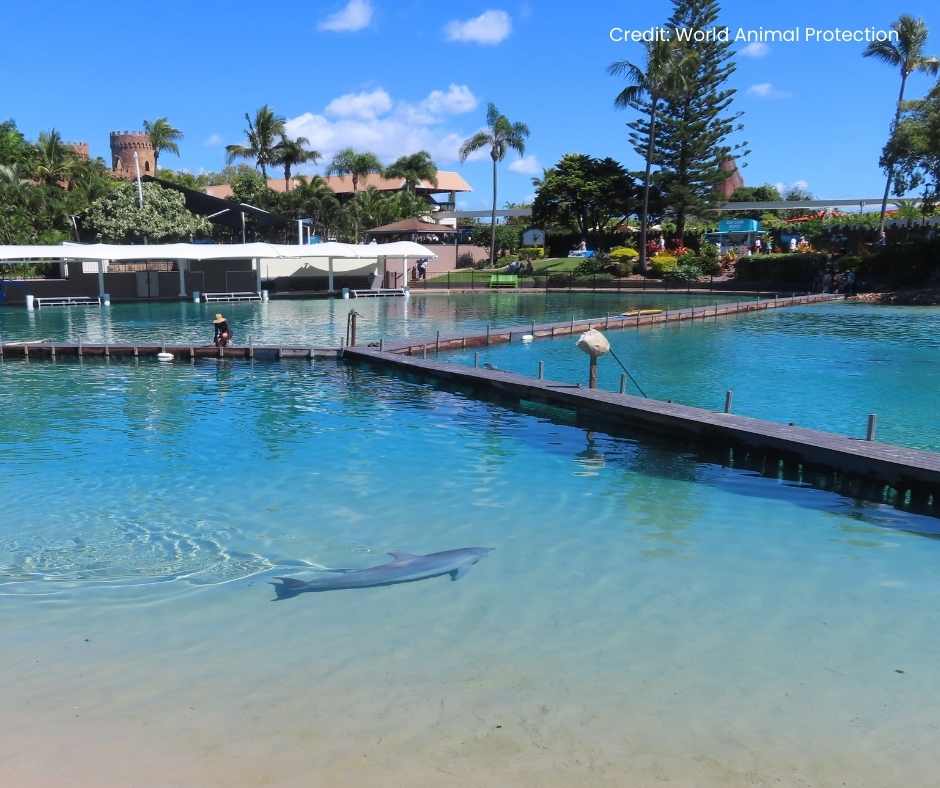
Environmental complexity
The wild has more diverse ecological, physical and cognitive dimensions that shape dolphins’ natural lives. Researchers emphasise that one of the greatest stressors for captive dolphins is the loss of control over movement, food, and who they socialise with.
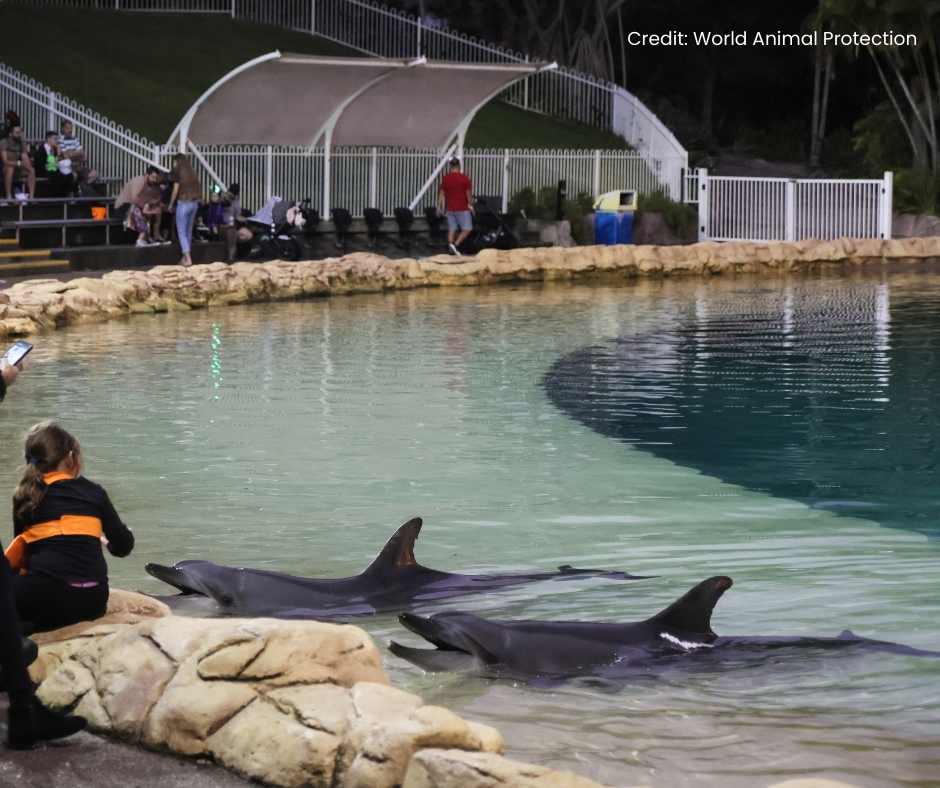
Noise
Dolphins rely on sound to navigate, forage, and maintain social bonds. At Sea World, lagoons are located near rollercoasters, helicopter flights, and crowds, exposing dolphins to repeated noise without the option to move away.
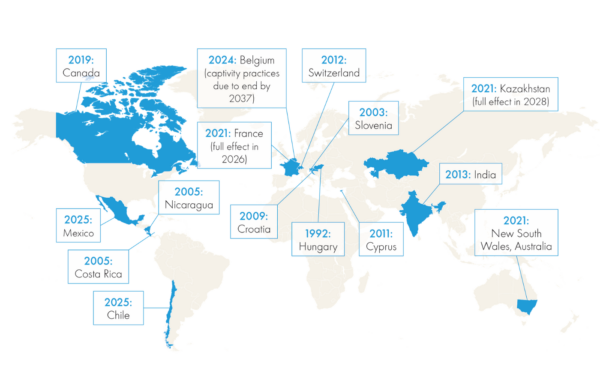
A global shift is already underway
Globally, a growing number of regions have restricted or ended dolphin captivity by banning
breeding, imports or public displays to align with shifting public expectations. In 2021, we secured a monumental breeding ban in New South Wales, Australia. Now it’s Queensland’s turn.
Major travel companies, including Expedia Group, Jet2holidays, Nordic Leisure Travel Group, Tripadvisor, Virgin Holidays, Airbnb and easyJet holidays, do not promote captive marine mammal entertainment, signaling a permanent shift in the tourism industry that Queensland cannot afford to ignore.
Help us end the cycle. Urge the Queensland Government and Sea World to take action and ban the captive breeding of dolphins and polar bears.
Credit: World Animal Protection