The season in numbers
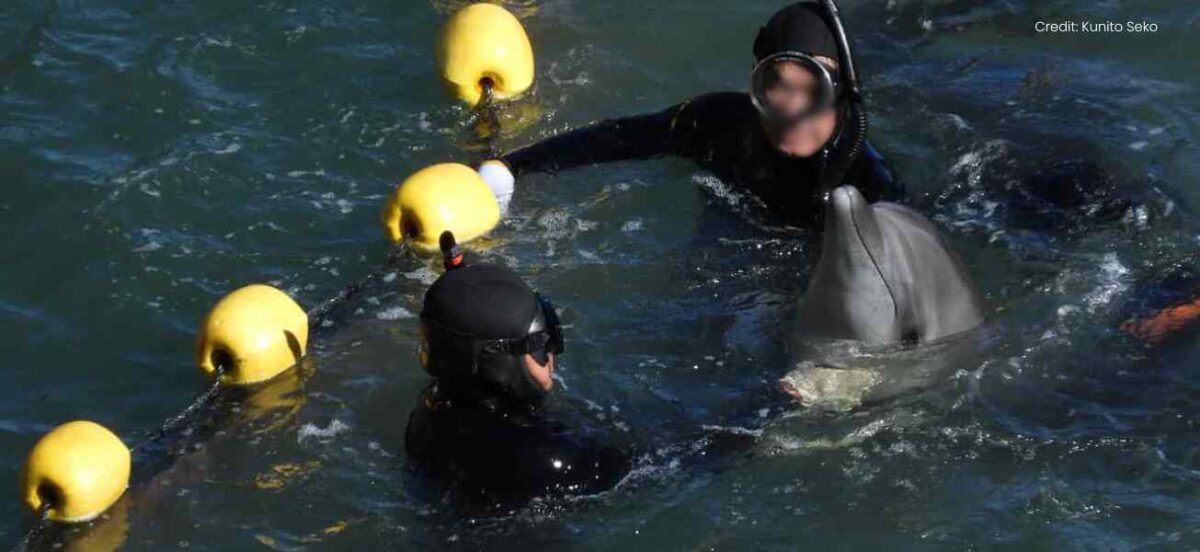
According to independent cove monitors, approximately 84 dolphins were taken captive during the 2025–26 season, and around 416 were slaughtered. Species included bottlenose, striped, Risso’s, rough-toothed dolphins, melon-headed whales, and short-finned pilot whales.
Two figures stand out. Slaughter numbers have risen sharply, reversing two consecutive seasons of decline. The 2024–25 season saw approximately 289 dolphins killed but this year’s figure climbs back toward levels last recorded in 2022–23. Meanwhile, captures fell slightly from last season’s 95, but remain far higher than the 14 recorded in 2023–24, confirming that live-capture demand continues to prop up the hunt’s economic model.
Season comparison
| Season | Slaughtered | Captured alive | Total removed |
| 2022–23 | 515 | 37 | 552 |
| 2023–24 | 530 | 14 | 544 |
| 2024–25 | 289 | 95 | 384 |
| 2025–26 * | ~445 | ~84 | ~529 |
* 2025–26 figures are estimates from independent cove monitors; final official totals subject to revision
Since 2012, the year Action for Dolphins was founded, more than 8,500 dolphins and small whales have been slaughtered in Taiji, and over 1,600 captured alive. And yet the long arc has moved in the right direction: the annual slaughter figure is down 55% on the levels recorded when we began, and live captures have fallen by 49%.
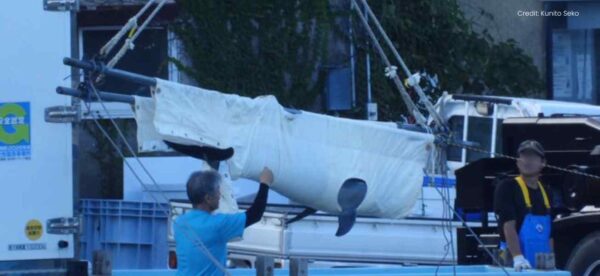
A dolphin being transported after being caught in the Taiji dolphin hunts
Where do captured dolphins go?
CITES trade records show that Japan exported 1,336 live wild dolphins to international buyers between 2012 and 2024. China received the great majority, with 1,122 animals imported over that period, approximately 79% of all recorded exports. Thailand received 99 and Russia 73. The remaining recipients include Ukraine, Vietnam, South Korea, Egypt, Saudi Arabia, and Bahrain. Several of the historically larger importers no longer appear in the records. Russia, once the second-largest destination, last recorded an import in 2018, and South Korea’s last recorded import was 2017. Of all destination countries, only China, Thailand, and Bahrain are recorded to have continued importing after 2021.
A live bottlenose dolphin can sell for up to $100,000USD. The live trade is the financial engine that keeps the Taiji hunts running.
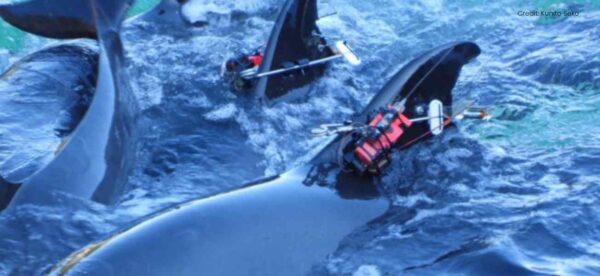
A dolphin being tagged in the Taiji cove
Dolphins being used in research: A new concern
Independent monitors documented a troubling new pattern in the 2024–25 season: drives in which pods were herded into the cove, tags were attached to individual dolphins’ bodies, and the pod was then released.
Driving a pod into the cove causes acute stress, pod fragmentation, and physical handling injury. A subsequent release does not undo those harms.
Tagging studies that rely on the drive hunt as their capture method are not ethically insulated from that method simply because the animals are released afterwards. The cove is the instrument of capture, and the welfare compromise begins the moment a pod is driven toward it. This is a question the broader marine science community must grapple with.
What you can do
The live trade is the financial foundation of the Taiji dolphin drive. Without demand from marine parks and aquariums, particularly in China and Thailand, the hunt’s economics would look very different. Action for Dolphins is working to disrupt that trade through regulatory pressure on importing countries, targeted campaigns against the travel platforms that continue to sell tickets to venues holding Taiji-sourced dolphins, and scientific accountability campaigns.
You can support that work by signing our petition. The hunt runs for six months. Our work never stops.
And the single clearest personal step remains this: do not buy a ticket to a dolphin show.
1 Vail, C.S., Reiss, D., Brakes, P., & Butterworth, A. (2020). Potential welfare impacts of chase and capture of small cetaceans during drive hunts in Japan. Journal of Applied Animal Welfare Science, 23(2), 193–208. https://pubmed.ncbi.nlm.nih.gov/30806084/
2 Fair, P.A., Schaefer, A.M., Romano, T.A., Bossart, G.D., Lamb, S.V., & Reif, J.S. (2014). Stress response of wild bottlenose dolphins (Tursiops truncatus) during capture-release health assessment studies. General and Comparative Endocrinology, 206, 203–212. https://pubmed.ncbi.nlm.nih.gov/25019655/