‘Scientific evidence…supports the conclusion that the drive hunts are inflicting pain and suffering on animals that are intelligent, sentient, and socially complex’ Diana Reiss, Ph.D. and Lori Marino, Ph.D.
What happens during the Taiji dolphin drive hunts?
The annual dolphin drive hunts in a small village called Taiji, in Japan, are one of the most controversial dolphin hunts in the world.
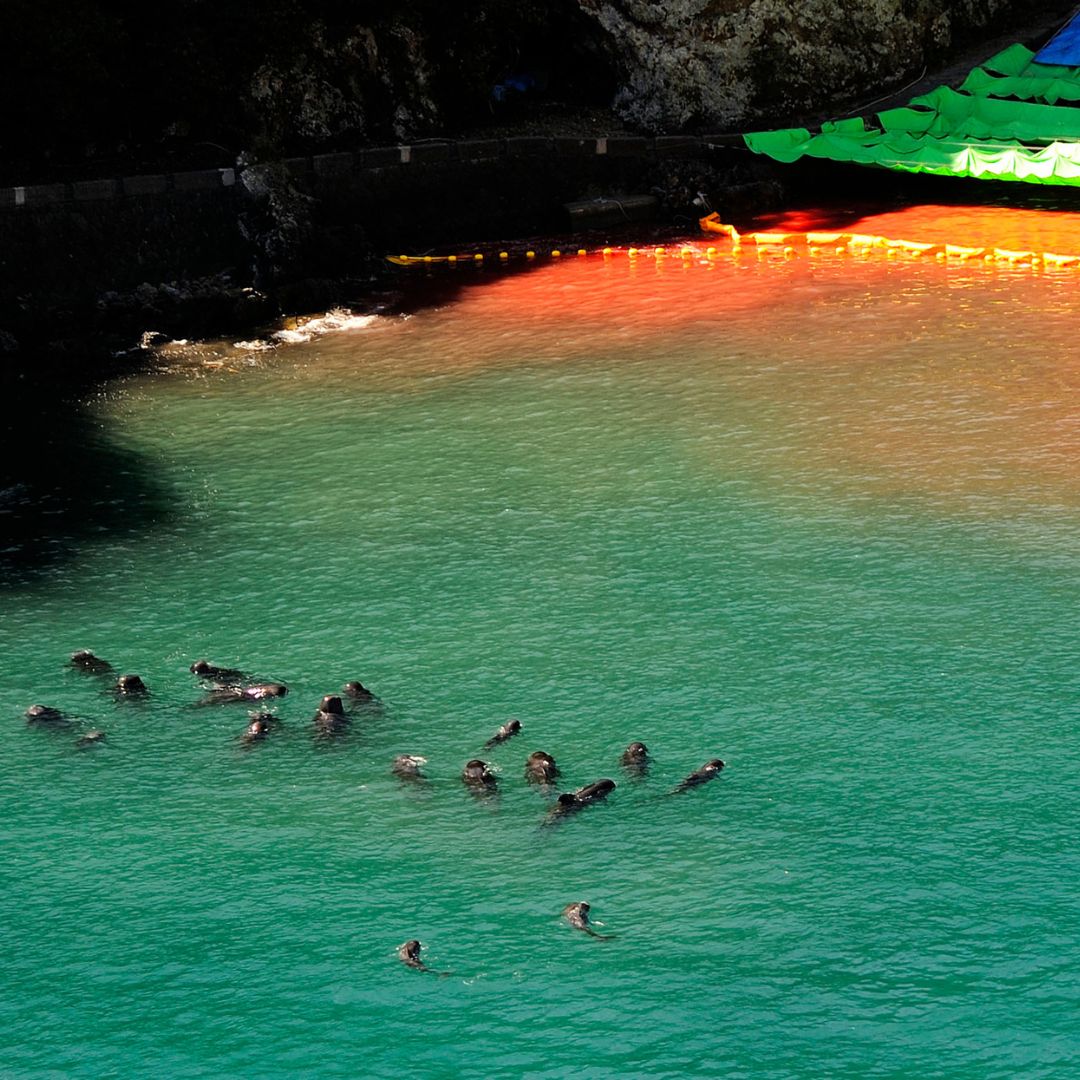
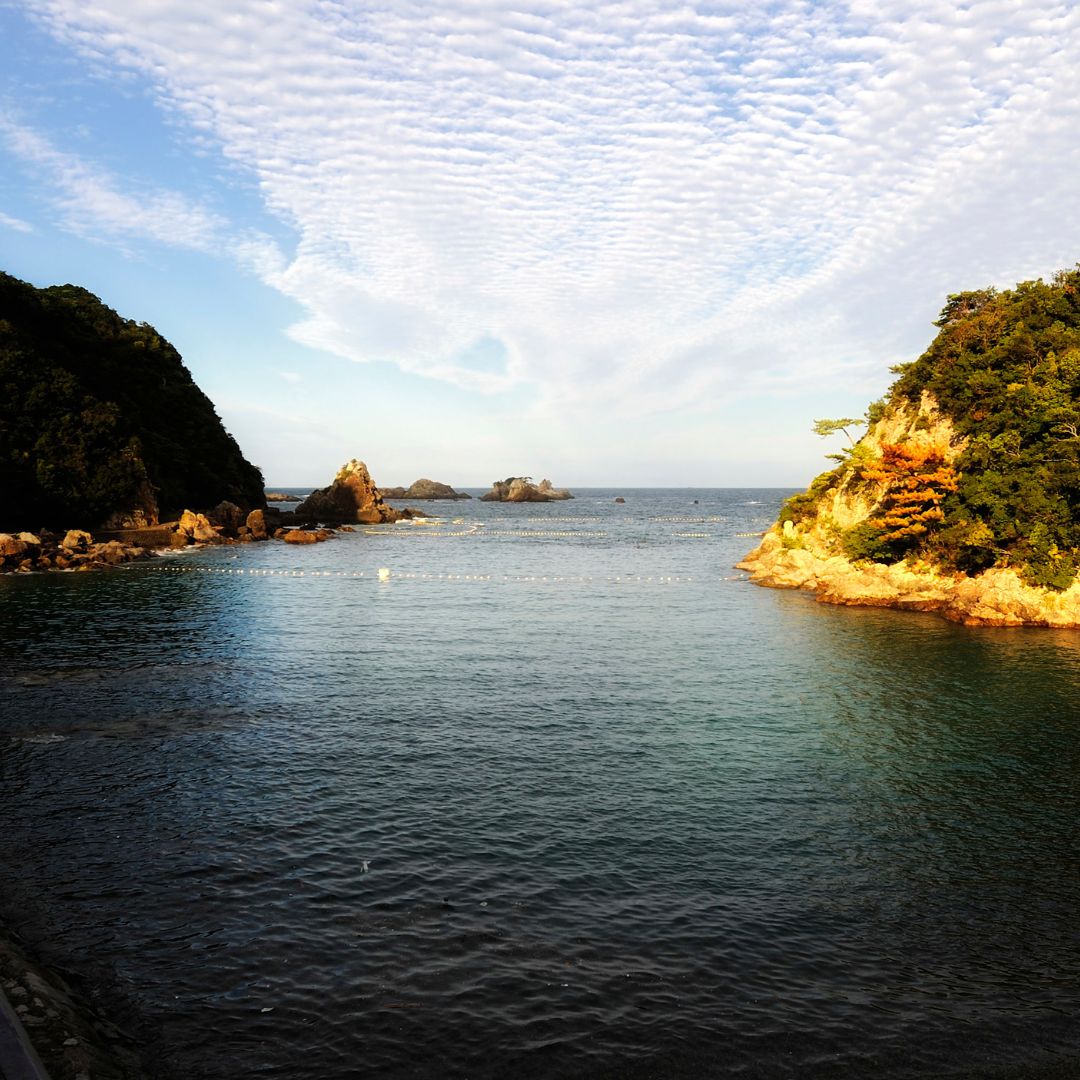
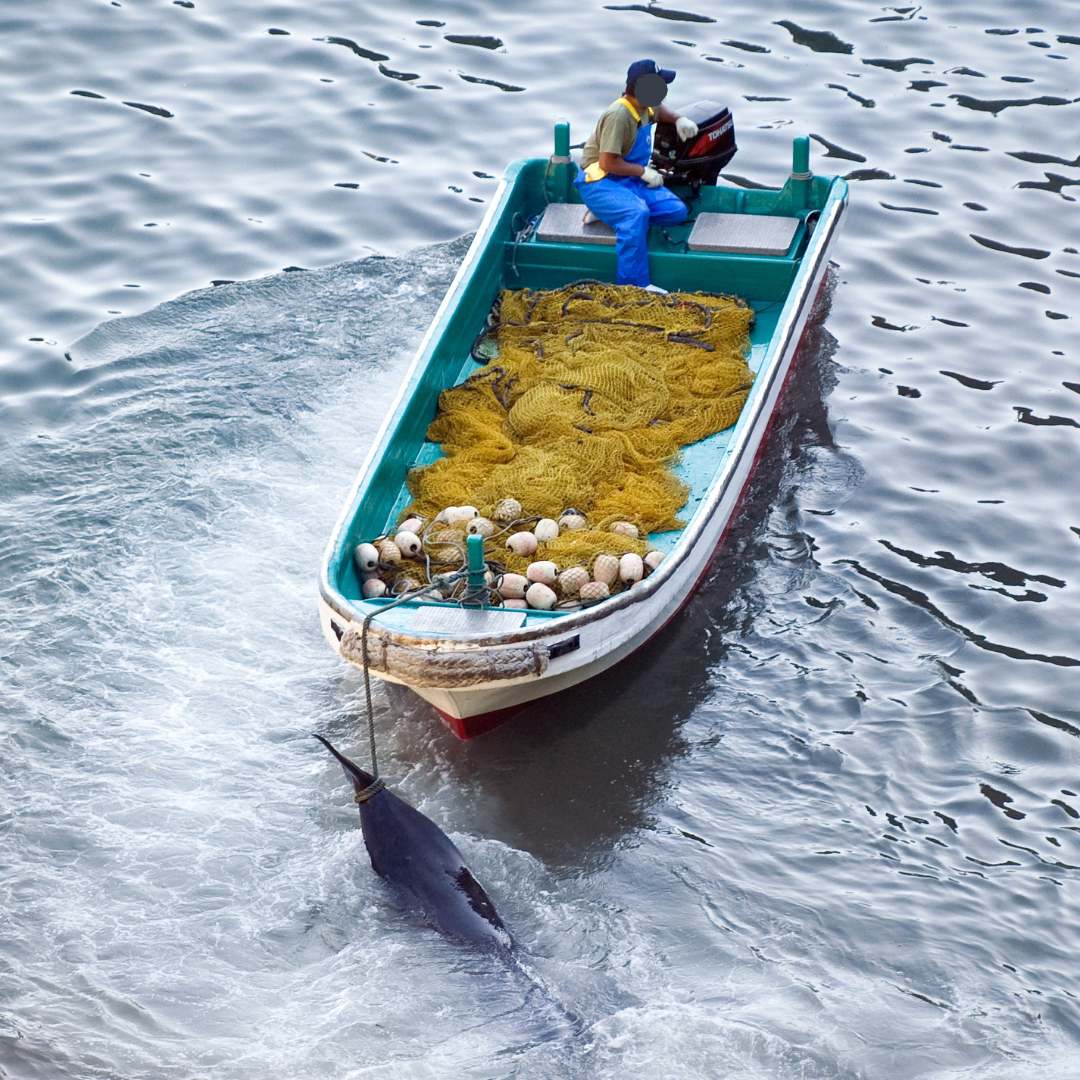
Every year from September to March, dolphin hunters find pods of dolphins and other small whales, bang on large metal poles to frighten and herd the dolphins into the cove. The hunters net off the area, sometimes leaving pods exhausted and trapped overnight.
Once the dolphins are trapped, they are separated into groups based on their age, size, and species. They are selected based on whether they are heading for a life in captivity, or their life will be cut short and they will be slaughtered.
The Taiji dolphin drive hunts continue because it is profitable to do so.
There are two economic drivers for these hunts.
Source Sami Chau Unsplash
Tourism
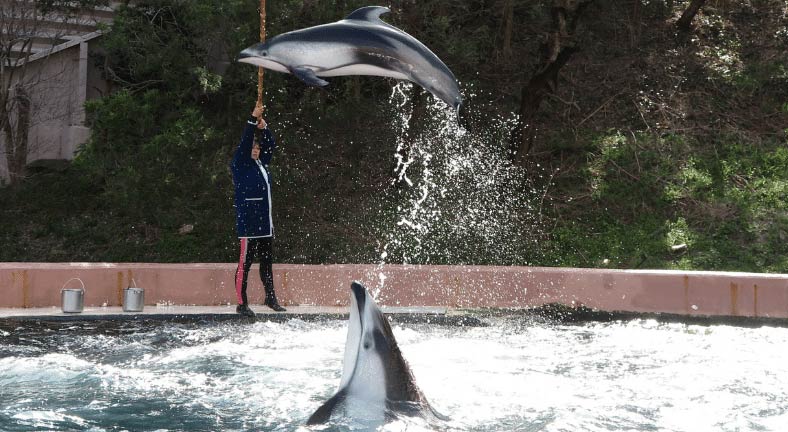
The ‘pretty’ dolphins are sold to marine parks and spend a life of misery in captivity. Sadly, these dolphins are confined in limited spaces, surrounded by artificial environments, and subjected to continuous human interaction and unnatural behaviours, all for humans’ amusement.
Source Robert Gilhooly
Food
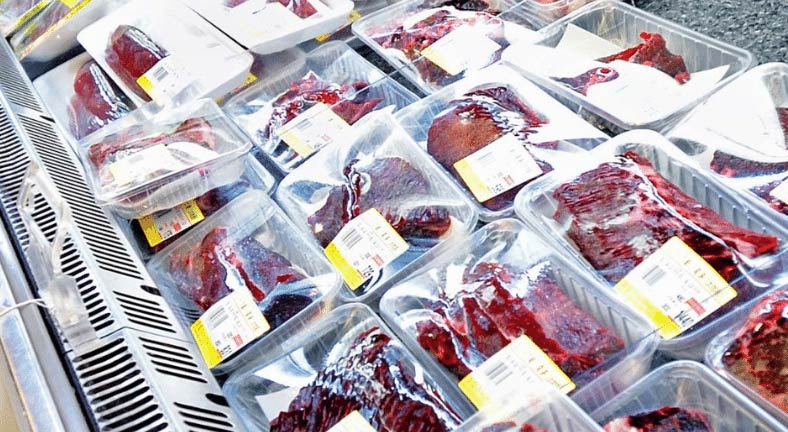
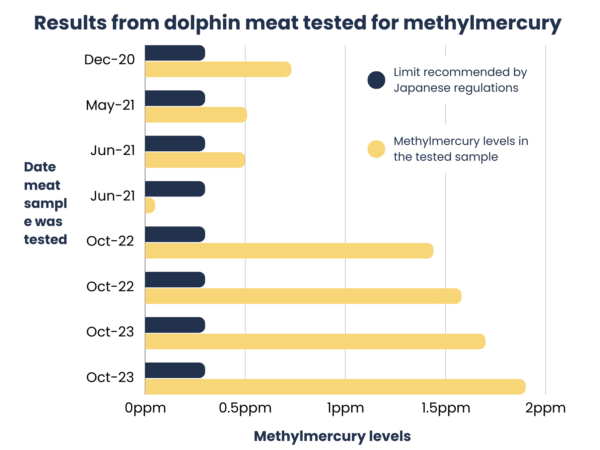
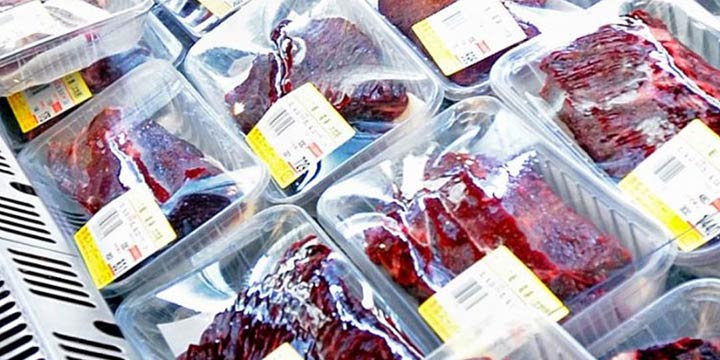
The remaining dolphins are slaughtered and sold for food. This is worrisome, as our investigations have shown mercury and methylmercury levels in dolphin meat samples well above the recommended limit in Japan.
Read the Waves of Profit Report to learn more about the connection between travel companies and the Taiji dolphin hunts
How many victims did the latest Taiji dolphin drive hunts claim?
400 dolphins and small whales
were caught or killed in the 2024-2025 season of the Taiji dolphin drive hunts.
What is the connection between the Taiji dolphin drive hunts and the sale of live dolphins?
The Convention on International Trade in Endangered Species of Wild Fauna and Flora (CITES) trade database shows that countries are still buying live dolphins from Japan. Sadly, after being ripped from the wild, these dolphins are at times kept in appalling conditions for the rest of their lives.
Countries that imported live dolphins from Japan between 2020 – 2024
Over 30 aquariums in Japan are also permitted to buy dolphins from the drive hunts.
What is the connection between the Taiji dolphin hunts and the sale of dolphin meat?
The connection between the sale of dolphin meat and the Taiji dolphin hunts has led to international criticism because of the possible impacts to human health.
Dolphins can accumulate high levels of toxins like mercury in their bodies, which can be harmful to humans’ health if consumed regularly. The World Health Organisation considers mercury to be one of the top ten chemicals of major public health concern.
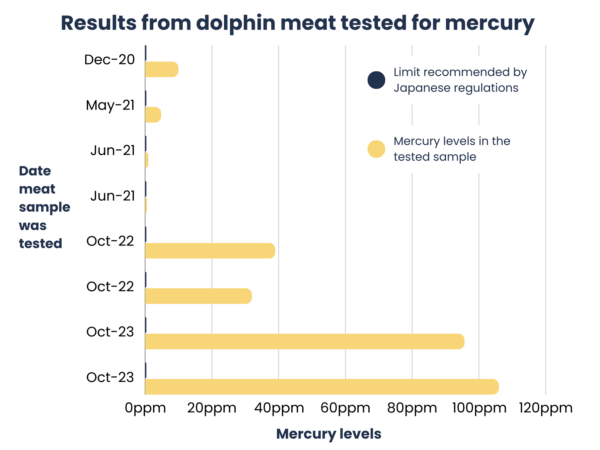
Many dolphin meat samples were tested by a Japanese laboratory. These samples contained mercury that is much higher than 0.4ppm – which is the amount recommended as safe for human consumption by Japanese regulations.
Tests completed in 2023 by a Japanese laboratory revealed that the mercury levels in a tested dolphin meat sample sold throughout Japan were up to 265 times higher than the government recommended limit.
The same dolphin meat samples were tested for methyl mercury. Methylmercury is considered the most poisonous among the mercury compounds. People are exposed to methylmercury when they eat marine life that contains this compound. The results showed that almost every sample contained methylmercury at levels higher than 0.3ppm – which is the amount recommended as safe for human consumption by Japanese regulations.
Despite this, dolphin meat continues to be sold with very little regulation or testing. If we can stop the sale of dolphin meat, it could save hundreds of dolphins from slaughter each year and help people being exposed to harmful toxins through consumption of dolphins.
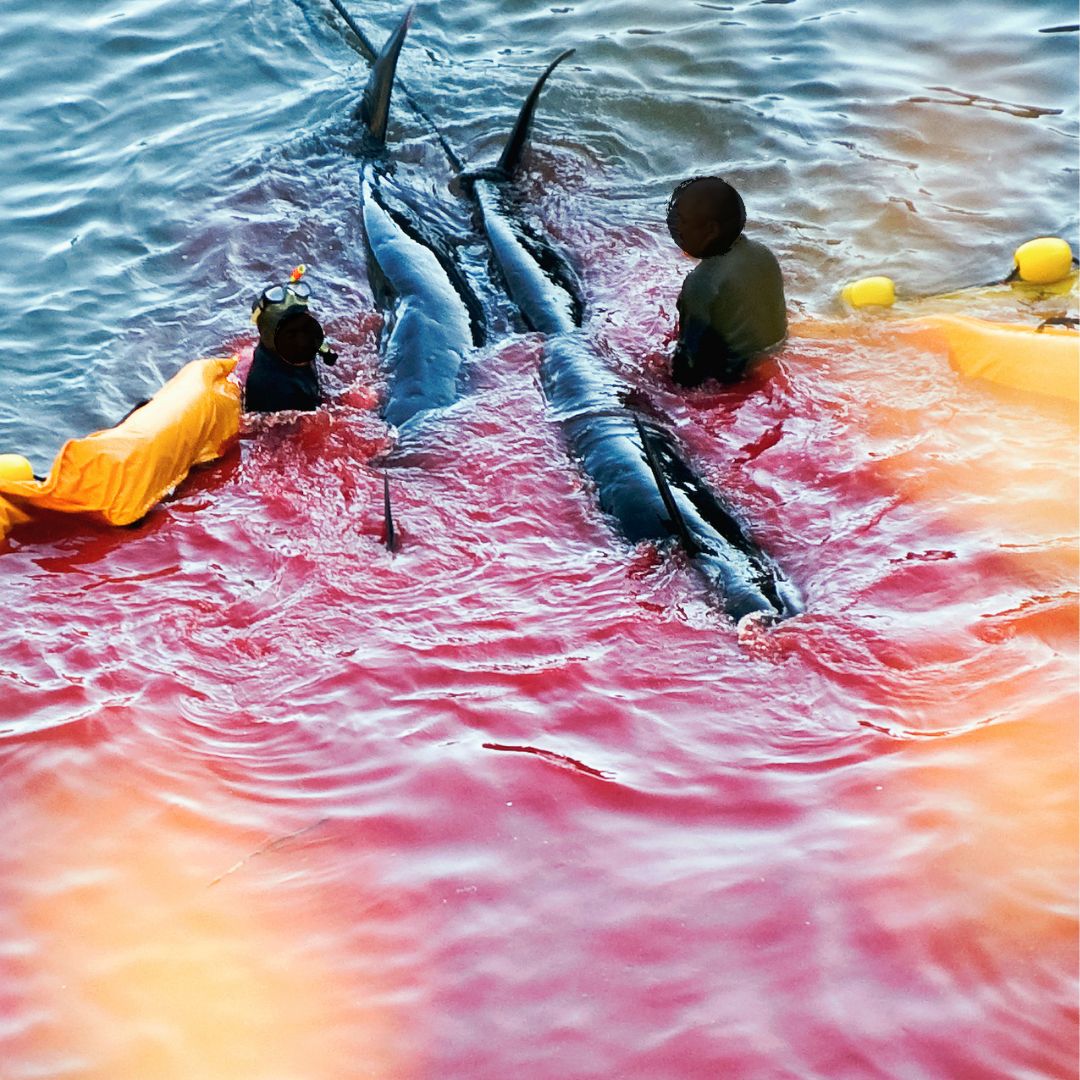
There are several methods used to capture and kill dolphins during the Taiji dolphin drive hunts. One of the most common methods is to drive a metal rod into the dolphin’s spinal cord, which causes paralysis and death. Another method involves cutting the dolphin’s throat and allowing them to bleed out.
Why don’t hunters use more humane killing methods?
The Taiji dolphin drive hunts have been criticised for the inhumane methods used to kill dolphins, which can cause prolonged suffering and distress. We believe the reason the hunters do not use more humane methods of killing which might be available – such as the use of anaesthesia before death – is simply cost. Their method of killing might be the cruellest, but we understand it is the cheapest.
The waters in which the Taiji dolphin drive hunts occur are within Japan’s national jurisdiction. International law gives coastal states sovereignty over their territorial sea. This means that Japan has the exclusive right to exploit the marine creatures in these waters.
Unlike some other marine species, dolphins are not covered under the International Whaling Commission moratorium on commercial whaling. Despite scientific evidence pointing towards the high intelligence and complex social structures of dolphins, they are not protected under the same regulations as some other marine mammals.
This means the Japanese Government can issue permits to hunt dolphins. The Taiji dolphin drive hunts are authorised by the Japan Fisheries Agency to a small group of fishermen. A catch quota is set each season. The 2023/24 quota is 1,824 beautiful dolphins and small whales.
Most other people in Taiji and in Japan do not having anything to do with the hunts.
Who is killing dolphins in the Taiji dolphin drive hunts?
The Taiji Fisheries Cooperative Association has jurisdiction over the local fisheries in Taiji. This Cooperative has 124 regular members and 221 associate members.
One of these members is called the Isana Cooperative which carries out the killing of dolphins and small whales in the Taiji dolphin drive hunt. [1]
The International Whaling Commission indicates the Taiji dolphin drive hunts are contributing to the depletion of multiple species of dolphins and small whales off the coast of Japan.
In particular, the population of the southern form of short-finned pilot whales migrating off Taiji appear to be in substantial population decline and require more protection. Instead, the Taiji dolphin drive hunters have free unlimited take of this species.
The only dolphins or small whales counted towards the quota are those that are killed or taken live for marine parks. This discounts dolphins that die in the gruelling capture process from stress or serious injury, abortions caused by stress during the drive hunt or death of a calf after being separated from their mother, and dolphins that die post-release from weakened physical health.
This means official data underestimates the damage the Taiji dolphin drive hunts are having on dolphin populations. [2]
United with thousands of dolphin defenders globally, we've achieved notable milestones in the fight to end the Taiji dolphin hunts. Check out our biggest wins.
Source Robert Gilhooly
Disrupting the dolphin meat trade
To stop the slaughter of dolphins for meat, we’re taking action against companies peddling dolphin meat. We have already successfully shut down a key supplier of dolphin meat in Japan after our investigation revealed mercury levels in one meat sample were shockingly 97.5 times beyond Japan’s regulatory recommended limit.
Source Robert Gilhooly
Combatting Taiji dolphin hunts
We tackled the World Association of Zoos and Aquariums (WAZA) as a way to disrupt the cruel dolphin hunts in Taiji, Japan. Garnering support through legal action and a petition signed by thousands, we persuaded 62 Japanese aquariums under WAZA to stop buying dolphins from Taiji – a groundbreaking achievement!
Want to learn more? Check out The Cove
Check out the 2009 Oscar-winning documentary The Cove, which explores the practice of dolphin drive hunting in Taiji, Japan. The Cove brought global attention to the Taiji dolphin drive hunts and explained the cruel killing method, the trade of live dolphins from the drive hunts, and explored the high levels of mercury found in dolphin meat.
Source Kunito Seko
How can you help disrupt the Taiji dolphin hunts?
Urge the Governor overseeing these hunts to halt the distressing capture and slaughter of dolphins.
By refusing to visit marine parks that keep dolphins in captivity, you can help reduce the demand for wild dolphins to be caught from Taiji and put pressure on marine parks to stop buying wild dolphins for entertainment.